
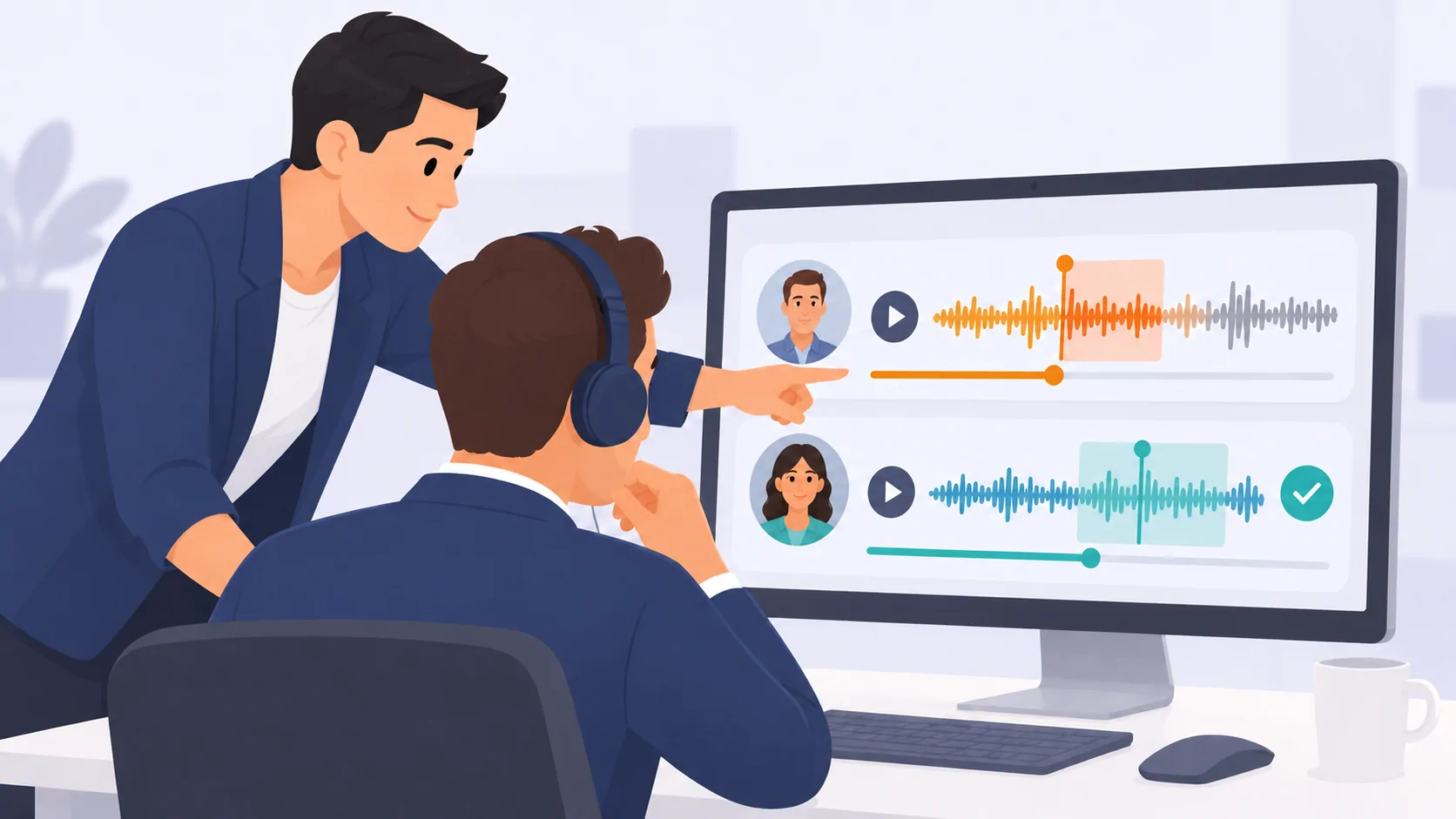
At CALLX1, we help experienced salespeople develop customer relationships, which can grow from smaller purchases into high-ticket sales. As agents take on more valuable accounts, they need to understand why some conversations lead to purchases while others end without a decision. Call recordings let you revisit those conversations and examine what you could not fully assess while speaking.
An agent can lose sales by repeating the same small mistake without recognising the pattern. They might interrupt a customer who is explaining a concern, rush through an important product detail, or continue presenting after the customer has shown that they are ready to buy.
Successful calls deserve the same attention. You may have asked a question which helped the customer explain what they wanted, or given an answer which resolved their uncertainty. Understanding what you did well helps you repeat it deliberately.
You can also learn from recordings of experienced colleagues. Hearing how another agent handles a difficult exchange gives you an example to study and practise. The following approach will help you use those recordings to improve your own conversations.
Begin with a situation you want to understand better. Perhaps customers discuss their interests freely until you present an offer. Perhaps you answer their questions but struggle to move the conversation towards a decision.
Choose a successful call and an unsuccessful call involving similar situations. Comparing an established customer’s routine purchase with a new lead’s first conversation would tell you little about why one bought and the other did not.
Before listening, note the context.
Write down your recollection of each conversation too. You can then compare what you remember with what you hear.
In Salesloft’s case study of Advanced, the company describes reviewing one good call and one challenging call during coaching sessions. Strong recordings also gave newer agents examples of effective selling.
Use the outcome to help select your recordings, but assess the conversation itself. A customer may buy despite a confusing explanation. Another may decline after an agent has handled the conversation well.
Listen to the successful call from beginning to end before examining individual exchanges. The customer’s decision may have depended on a question or explanation which came long before the agent asked for the sale.
Follow what the customer said, how the agent responded, and what happened next.
Consider a hypothetical customer who says, “I am not sure I would use everything in that option.”
The agent asks, “Which part do you expect to use most?”
The customer explains their preference. Afterwards, the agent focuses the explanation on that preference and evaluates if the remaining features might be useful. The customer now has a clearer basis for deciding.
The behaviour worth repeating is specific. The agent asked the customer to explain their uncertainty before deciding which information to provide.
Mark useful moments with a timestamp and a quick observation.
Look for the customer’s response to each action.
Did they explain their preference more fully?
Have they confirmed that they understood?
Did they move from asking about the product to asking how to purchase it?
These exchanges give you evidence to discuss with a coach. They also help you recognise skills which you already possess but may apply inconsistently.
Listen to the complete unsuccessful call. Then, return to moments that need closer attention.
You may remember that the customer objected to the price. The recording might reveal that they first asked a product question, which never received a simple answer. You then began discussing the price while that uncertainty remained.
Mark the point where the question arose. Replay enough of the conversation before and after it to understand the exchange.
Write down what you can hear.
“The customer asked whether the option included a particular feature. I described another benefit and moved on.”
That observation identifies something you can examine. A broad judgement such as “I handled the objection badly” does not tell you what to change.
Consider why you responded as you did. You may have misheard the question, lacked the product knowledge to answer it, or been concentrating on the next part of your presentation.
Each explanation requires different work. You might need to practice checking a customer’s question before answering. You might need to confirm a product's details. If you knew the answer but continued with your prepared presentation, you could practise responding to an interruption without losing your place.
Check other recordings for the same behaviour before describing it as a repeated mistake. One missed question gives you something to correct. Several similar exchanges suggest a habit which needs sustained attention.
A transcript helps you locate a question or compare two explanations. The audio lets you hear the timing and delivery.
Listen for places where you speak over the customer, accelerate through important details, or answer your own question before the customer has time to respond. Notice whether your tone changes when you state a price or ask for a decision.
Suppose you ask, “Would you like to go ahead?” A brief silence follows. Before the customer answers, you add another benefit, introduce an alternative, and start explaining again.
On replay, you can hear that you resumed the presentation before receiving an answer. You now have a clear practice task. Finish the question and give the customer time to respond.
Faster playback can help you locate a section. Return to normal speed when assessing pauses, pace, or interruptions because changing the playback speed changes how those moments sound.
Pay equal attention to the customer’s side of the conversation.
Did they finish explaining?
Were you asked to repeat something?
Did your next sentence answer what they had just asked?
Gong’s call review interface, for example, combines transcripts and playback controls with speaker timelines and time-stamped comments. Where your company’s system offers these features, use them to locate the exchange. Then listen to the surrounding conversation before reaching a conclusion.
Approved recordings of colleagues can show you how another agent handles a situation you find difficult.
If you struggle to explain an unfamiliar offer, listen to how an experienced colleague makes it understandable. If you hesitate when asking for a decision, examine how they recognise the point at which the customer has enough information to make a choice.
We recommend studying peers’ calls, including recordings from top closers and conversations associated with both won and lost business.
Choose an exchange that relates to the skill you want to develop. Pause the recording after the customer speaks and decide how you would respond. Then, play the next section.
Compare your response with the agent’s response.
What did they notice?
Which detail did they ask the customer to explain?
Why did they recommend a purchase at that point, or continue asking questions?
You may discover that the agent explored something you would have passed over. Understanding that decision helps you apply the lesson in your own words.
At CALLX1, relationship building and closing both form part of agents’ development. An experienced agent may recognise when a familiar customer needs a concise answer and when a larger purchase requires fuller discussion. Recordings give you an opportunity to examine how that judgement appears in a conversation.
Review the recording yourself before asking for feedback. Identify something you handled well and an exchange you want help understanding. Bring the timestamps so that you and your coach can listen to the same evidence.
Explain what you thought was happening during the call and what you noticed afterwards.
For example, “At this point, I thought the customer needed another explanation, so I continued presenting. Listening again, I think they may have been trying to ask how to proceed.”
Your coach can examine whether the customer’s words support that interpretation. If you disagree, replay the exchange and discuss what each of you heard.
We recommend asking agents to assess their own calls before the coach shares an opinion. We also recommend choosing one improvement and practising it during the session.
A short set of questions will help you compare recordings without judging each call by a different standard.
Support each answer with an example from the recording. If you decide that an explanation was unclear, identify which part needed more detail. If you handled something well, describe the action you would repeat.
CALLX1’s mentoring and role play support the development of these selling skills. Preparing a specific exchange for discussion gives you a concrete starting point for feedback and practice.
Choose one behaviour to work on first. You might practise allowing the customer to finish, checking an unclear question, or giving a shorter explanation before asking whether it answered their concern.
Use the recorded exchange as the starting point for role-play. Ask your colleague or coach to vary the customer’s response so that you have to listen and adapt.
After practising, review later calls in which a similar situation occurs. First, check whether you applied the change. Then examine the customer’s response.
Did they explain their concern more fully?
Have they confirmed that your answer resolved the issue?
Did the conversation reach a clear decision about the purchase?
Track sales outcomes alongside those observations. Look across several comparable calls before drawing a conclusion since differences between customers and offers can affect the results. You may also find that you understand the new behaviour in practice but still need reminders to use it during a live call.
Where company systems and permissions allow, bookmark a useful recording or extract. Add a note which explains the situation, the behaviour worth repeating, and the customer’s response.
A label such as “clarified the customer’s question before explaining the offer” tells you what to study when you return to it.
Keep enough surrounding conversation to show why the response fit. You can then compare an earlier example with a later call and hear whether you have changed the behaviour you intended to improve. Use your company’s approved arrangements for storing and sharing customer recordings.
You can begin reviewing calls while handling smaller purchases and continue as you take responsibility for more valuable customer relationships. A question you learn to answer clearly today may prepare you for a more detailed conversation with a high-spending customer later.
Choose a recent successful call and a comparable call which ended without a sale. Review both, then take one specific exchange into your next coaching conversation. Leave that discussion knowing which behaviour you will practise and what you will listen for in your later recordings.
At CALLX1, we recruit experienced salespeople for high-ticket gaming sales. Our agents work with the company’s own customer database, which gives them opportunities to develop relationships across conversations and purchases.
Our professional development programme covers sales psychology, relationship building, objection handling, and closing. Workshops, role play, and mentoring provide continuing support as agents apply those skills and prepare for greater sales responsibility.
If you want to build on your sales experience with that support, review CALLX1’s open positions and application requirements.